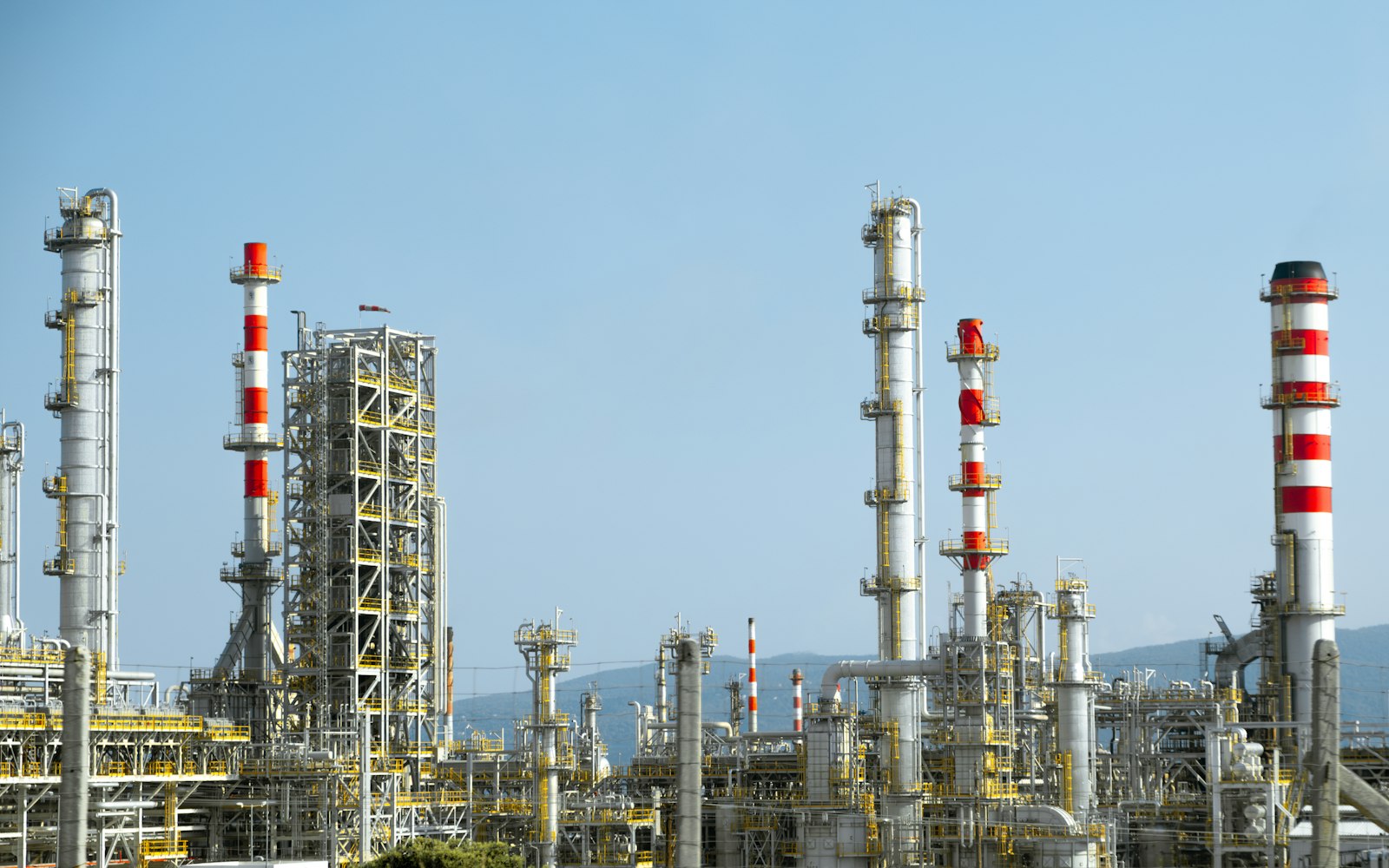
In oil, gas and fuel the lone-working risk is that a collapse happens where nobody is watching. The controls that matter are automatic man-down and no-movement detection, timed check-ins that escalate when they are missed, one-tap SOS, and an alarm that actually reaches a responder with a precise location, including on remote off-grid sites. In a classified ATEX zone, the device running it must itself be intrinsically safe.
Why lone working is sharper in this sector
Fuel and petrochemical work concentrates risk in exactly the places with the fewest people. A remote metering or pumping station is visited by one technician. A tank farm or depot is walked at night by a single operator. A forecourt or bunkering job is run solo. The site is hazardous, the task is routine, and for long stretches nobody is close enough to notice if something goes wrong. That is the gap: not that the work is unusually dangerous on a good day, but that on a bad day the person is alone when it matters most.
The hazards a lone worker alarm has to account for
Three things make this sector different from a general lone-working risk. First, a collapse can be silent and sudden: a gas exposure such as H2S, a slip from a tank or gantry, or simply a medical event leaves the worker unable to call for help, so any control that relies on them pressing a button has already failed. Second, the sites are often remote, with patchy or no mobile coverage, so an alarm has to survive a blackspot. Third, parts of the site are classified hazardous areas, which limits what equipment can even be carried in.
An honest assessment plans for the worst version of each: the worker who cannot reach for a phone, the station with no signal, and the zone where an ordinary handset is not allowed.
What good cover looks like
The controls that actually close the gap do not wait for the worker to act. Automatic man-down and no-movement detection raise the alarm on a collapse without a button press, carrying the worker's location with it. Timed check-ins, sized to the task rather than a token hourly tap, escalate the moment one is missed. A one-tap SOS covers the times the worker sees trouble coming.
Just as important is what happens after the trigger. Rather than a single contact who might not answer, the alarm follows an ordered escalation chain, the duty manager and then the nearest available responder, across push, SMS, WhatsApp and voice, with a precise what3words location attached so help goes to the right gantry or station, not the main gate.
Remote and off-grid sites
Pumping stations, metering points and pipeline sites are frequently beyond mobile coverage, which is where most lone-worker apps quietly stop working. Off-grid satellite SOS raises the alarm where there is no signal at all, and where even that is not fitted, timed check-ins still protect the worker: a missed check-in escalates on schedule to a named responder, and alerts queue and send the moment signal returns rather than being lost in the blackspot.
The ATEX point most apps skip
A lone worker app is software, and software is only as compliant as the device it runs on. In a classified hazardous area, Zone 1 or 2, the handset or wearable itself must be intrinsically safe and ATEX certified, because an ordinary phone is a potential ignition source and is not permitted past the line. The practical answer is to run the protection on an ATEX-rated handset where the worker enters classified zones, and a standard device everywhere else. Any supplier who ignores this is selling you a control you cannot legally use where you most need it.
Evidencing it for COMAH and HSE
Lone working in this sector is rarely a question of whether you have a system and usually a question of whether you can prove it works. Timed check-in records, an ordered and logged escalation, and a tamper-evident audit trail let you evidence the controls a risk assessment and a COMAH safety case require, rather than asserting them. Vygard is built around that: the lone-working controls are designed to be demonstrable after the fact, not just present.
Frequently asked questions
- Can a lone worker app be used in a hazardous (ATEX) area?
- The app itself is software; in a classified Zone 1 or 2 area it must run on an intrinsically safe, ATEX-certified handset or wearable, because an ordinary phone is a potential ignition source. In non-classified areas a standard device is fine. The practical setup is an ATEX-rated handset for classified zones and a standard one elsewhere.
- How does it help if a worker collapses from a gas exposure?
- Automatic man-down and no-movement detection raise the alarm without the worker having to press anything, with their location attached, so a collapse is caught within minutes and a responder is directed to the right spot rather than the problem being found at the next patrol.
- What about remote stations with no mobile signal?
- Off-grid satellite SOS raises the alarm where there is no mobile coverage. Where that is not fitted, timed check-ins still protect the worker: a missed check-in escalates on schedule to a named responder, and alerts queue and send when signal returns.
- Does it help with COMAH and HSE lone-working compliance?
- Yes. Timed check-in records, a logged escalation chain and a tamper-evident audit trail evidence the lone-working controls a risk assessment and a COMAH safety case require, so you can demonstrate them rather than just assert them.
- Who does the alarm actually reach?
- An ordered escalation chain rather than a single contact: the duty manager first, then the nearest available responder, across push, SMS, WhatsApp and voice, with a precise what3words location, so an alarm is not lost because one person did not answer.
Related articles
Last updated 2026-10-01