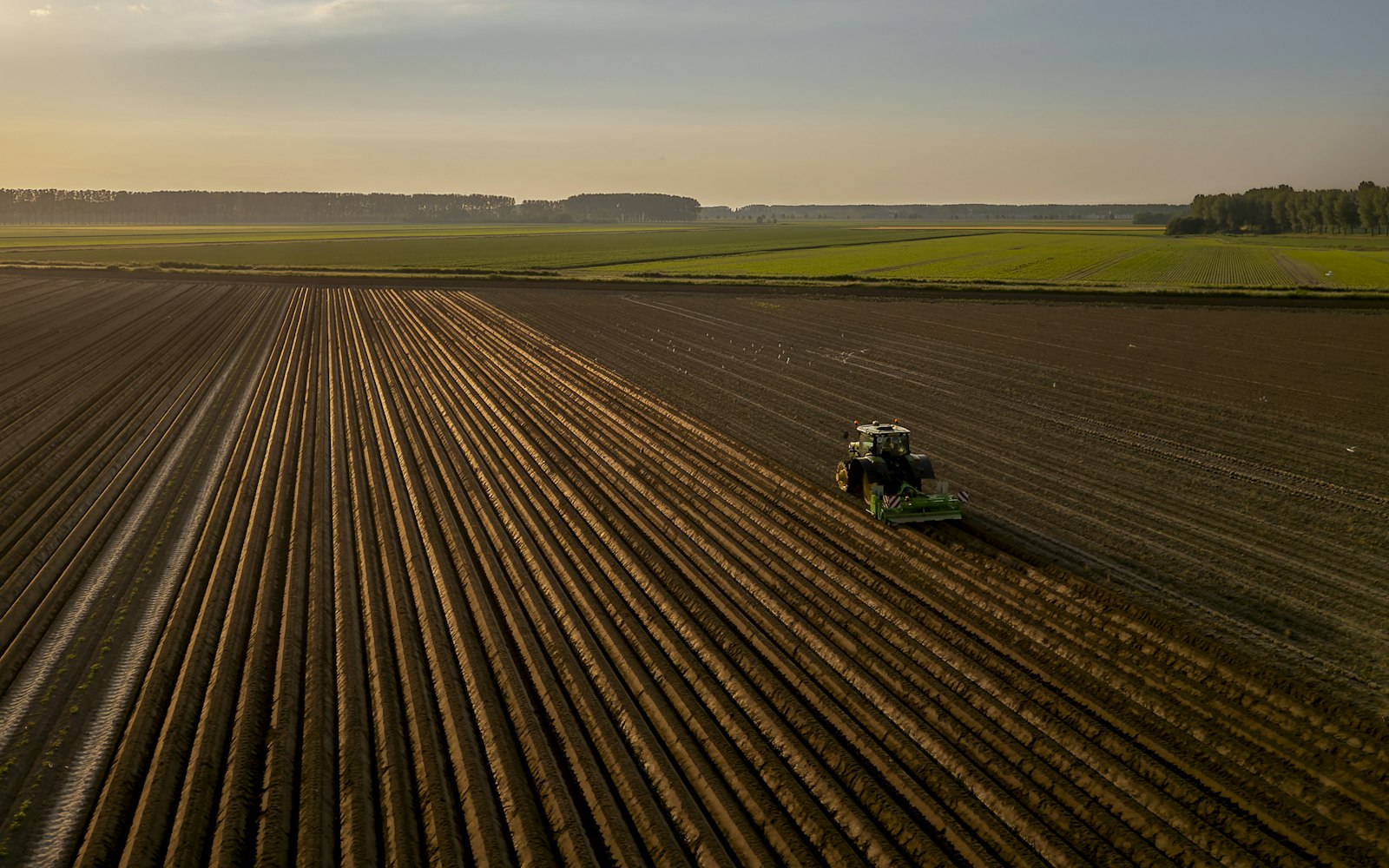
Farming is the most dangerous industry in the country and the most solitary, usually in places with no mobile signal. The controls that matter are automatic man-down and no-movement detection for a machinery incident, a quad rollover or a fall, off-grid satellite SOS for fields with no coverage, timed check-ins that escalate when missed, and one-tap SOS, all carrying a precise location.
Why farming is the hardest case
Agriculture has the highest fatal-injury rate of any sector in the UK, and it combines that with two things that make lone working especially dangerous: the work is overwhelmingly solitary, and it happens in exactly the places with the weakest or no mobile coverage. A farmer pinned under a quad, caught by a PTO shaft, crushed against a gate by cattle or lying injured in a far field is often hours from anyone noticing, and often beyond the reach of an ordinary phone.
The hazards to plan for
Machinery is the biggest killer: overturning quads and tractors, PTO entanglement, being struck by moving plant. Livestock handling causes serious crush injuries. Falls from height, slurry and confined spaces add to it. In almost every case the worker ends up on the ground, unable to reach for a phone, in a spot with poor or no signal, so any control that depends on them making a call has already failed.
An honest plan assumes the worst version: the worker who cannot move, in a field with no signal, where nobody knows exactly where they are.
What good cover looks like
Automatic man-down and no-movement detection raise the alarm on a collapse, a rollover or a fall without a button press. A one-tap SOS covers the times the worker sees trouble coming. Timed check-ins, sized to the job, escalate the moment one is missed, so a worker who has not come back from a far field is chased within minutes rather than at dark.
Because reaching someone is the whole point, the alarm follows an ordered escalation chain, across push, SMS, WhatsApp and voice, with a precise what3words location so a responder or the emergency services are sent to the right field, not the farmhouse.
The signal problem, solved
This is the part that matters most in agriculture and the part most lone-worker apps cannot answer. Off-grid satellite SOS raises the alarm from a field with no mobile coverage at all, and where a trigger happens in a blackspot, alerts queue and send the moment signal returns. For a sector defined by remote, unsignalled ground, cover that quietly stops working at the field gate is no cover at all.
Frequently asked questions
- Why is lone working such an issue in farming specifically?
- Agriculture has the highest fatal-injury rate of any UK industry, it is overwhelmingly solitary work, and it happens where mobile coverage is weakest, so an injured worker is often both alone and unreachable, which is the worst combination.
- How does it help after a quad rollover or a machinery incident?
- Automatic man-down and no-movement detection raise the alarm without the worker pressing anything, with their location attached, so a worker who is pinned or unconscious still gets help sent to the right field.
- Does it work in a field with no mobile signal?
- Yes, this is the key point for farming: off-grid satellite SOS raises the alarm where there is no mobile coverage, and alerts triggered in a blackspot queue and send the moment signal returns.
- Can a family member or a neighbour be the responder?
- Yes. The escalation chain can be a named responder of your choosing, a duty contact, a family member or a neighbour, across push, SMS, WhatsApp and voice, with the worker's location attached so they can reach them.
Related articles
Last updated 2026-10-01