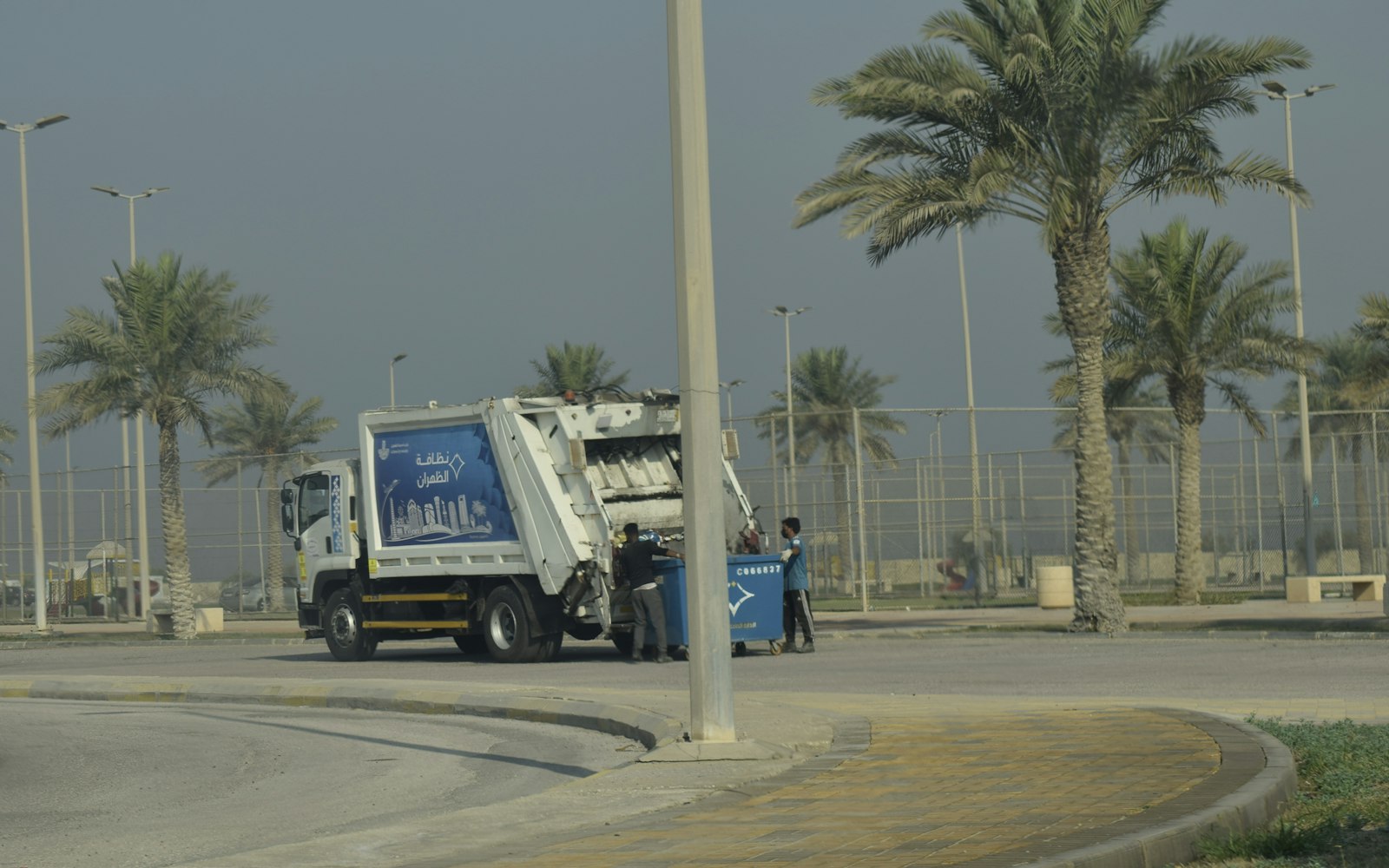
Waste work combines a struck-by risk from moving vehicles with long stretches where the worker is on their own and out of sight. The controls that matter are automatic man-down detection for a collapse or a strike, one-tap SOS for aggression, timed check-ins that escalate when missed, and an alarm that reaches a responder with a precise location rather than a single contact who might not answer.
Where the risk actually sits
Waste and recycling looks like team work, and often is, but much of it is effectively lone working: a loader a street ahead of the vehicle, a street-cleansing operative on a round, a driver on a rural collection, a worker at a quiet corner of a transfer station. The sector carries one of the higher injury rates in the country, and the moments that go wrong, a strike from a reversing vehicle, a fall, a sharps injury, an aggressive member of the public, usually happen when the nearest colleague is not looking.
The hazards a lone worker alarm has to cover
Three stand out. A struck-by or a fall can leave the worker on the ground unable to call for help, so detection has to be automatic. Confrontation with the public is common and can escalate fast, so a discreet one-tap SOS matters. And rounds spread workers across a wide area, so an alarm has to carry a precise location to be any use at all.
An honest plan covers the worker who cannot press a button, the one who needs help quietly, and the one whose exact spot nobody knows.
What good cover looks like
Automatic man-down and no-movement detection raise the alarm on a collapse without a button press. A one-tap SOS, discreet enough to use in front of someone, covers confrontation. Timed check-ins, sized to the round, escalate the moment one is missed so a problem on a quiet rural collection is caught in minutes.
After the trigger, the alarm follows an ordered escalation chain, the duty manager and then the nearest available responder, across push, SMS, WhatsApp and voice, with a precise what3words location, so help reaches the right street rather than the depot.
Rural rounds and blackspots
Rural and semi-rural collections run through patchy coverage, which is where a lot of lone-worker apps quietly fail. Alerts that queue and send the moment signal returns, rather than being lost in the blackspot, keep the worker protected across a round, and for genuinely off-grid routes, off-grid satellite SOS raises the alarm where there is no signal at all.
Evidencing it
WISH guidance and a lone-working risk assessment expect controls that can be shown to work. Timed check-in records, a logged escalation and a tamper-evident audit trail let you evidence them after the fact rather than assert them, which is what an auditor, an insurer or a coroner actually asks for.
Frequently asked questions
- Is refuse collection really lone working if crews work in teams?
- Often, yes. A loader ahead of the vehicle, a street-cleansing operative on a round or a driver on a rural collection spends long stretches out of sight of colleagues, which is lone working for the purposes of a risk assessment even within a crew.
- How does it help with a struck-by or a fall?
- Automatic man-down and no-movement detection raise the alarm without the worker having to press anything, with their location attached, so a collapse is caught in minutes and a responder is sent to the right spot.
- What about aggression from the public?
- A discreet one-tap SOS raises the alarm quietly, escalating to a named responder with the worker's location, so a confrontation can be dealt with before it becomes an injury.
- Does it work on rural rounds with poor signal?
- Alerts queue and send the moment signal returns rather than being lost in a blackspot, and for genuinely off-grid routes off-grid satellite SOS raises the alarm where there is no mobile coverage at all.
Related articles
Last updated 2026-10-01