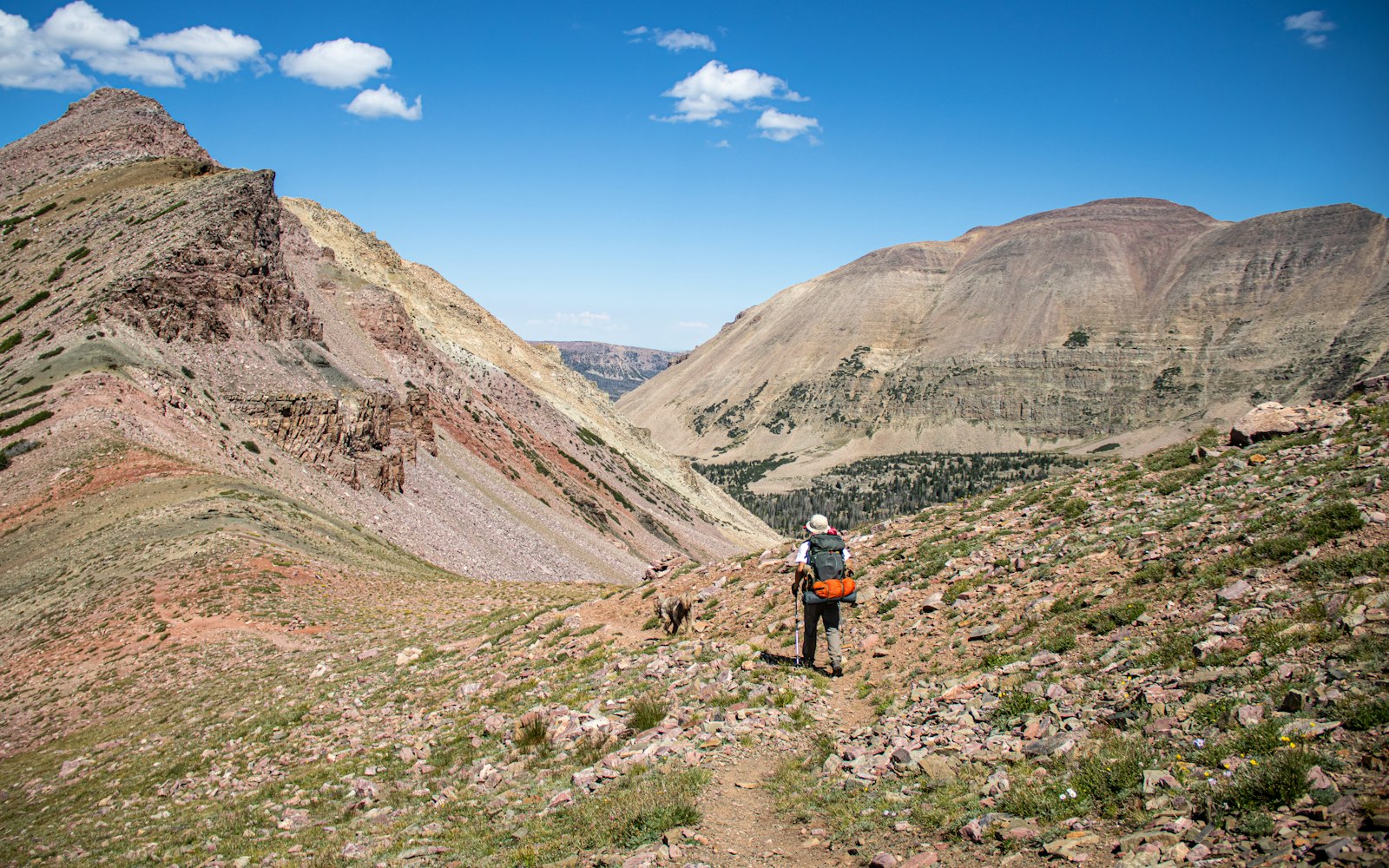

Up the hill on your own, with a safety net that reaches you.
Hiking mode is built for the fell and the forest — a fall detected where nobody would notice, a check-in cadence that suits a long day out, and an SOS that survives the blackspots.
- 45 minCheck-in cadence
- Off-gridSOS queues & sends
- SatelliteOn supported phones
On a busy path someone would notice a fall. On a windblown fell, walking alone, nobody does — and the minutes that follow are the ones that matter. Hiking mode holds a check-in line all day and keeps your SOS working even when the signal doesn't.
Fall detection, offline maps and a line to Mountain Rescue.
- Fall detection tuned for uneven ground
- Longer check-in cadence for a full day out
- Works through signal blackspots — saved and sent on return
- One-tap SOS to your people and, on the monitored tier, a UK ARC
How Hiking works, step by step.
- 1
Start Hiking before you set off
Tap Hiking in Vygard Sports. Check-ins move to a 45-minute cadence that suits a long walk, and GPS eases to preserve battery.
- 2
Confirm each check-in
Vygard nudges you at each interval. A tap confirms you're fine. Miss one and your people are told, with your last known location.
- 3
Walk — fall detection holds the line
A fall on uneven ground starts a countdown. If you can't cancel it, the alarm goes out with your location.
- 4
Lose signal? It still counts
Trigger an SOS or have a fall detected in a blackspot and it's saved with your last position, then delivered the instant coverage returns.
- 5
Arrive — end the session
Close out the walk when you're down. On newer phones your SOS can even travel over satellite when there's no mobile signal at all.
The Hiking pack, spec by spec.
The same safety engine as every mode in Vygard Sports, tuned for hiking. Indicative values — refined in real-world use.
- Detects
- Fall on uneven ground
- Fall sensitivity
- Mediumtuned for rough terrain
- Silent check-in
- Every 45 min
- Location cadence
- Every 60 seconds (battery-aware)
- What triggers an alert
- Detected fall, manual SOS, or a missed check-in
- Who's notified & how
- Your trusted contact by push, SMS & call — plus a UK ARC on the monitored tier — with last-known location
- Works off-grid
- Alerts triggered with no signal are saved with your last location and sent the instant coverage returns — over satellite on supported phones.
- Devices
- iPhone · Apple Watch (wrist-only SOS) · Android + Wear OS. No dedicated hardware to buy.
- Price
- $8.99/mo — one subscription covers every mode. Start free, no card.
Blackspot-proof
The alert queues locally and delivers, timestamped, when you're back in coverage.
Day-long cadence
Check-ins and GPS are tuned so a full day out doesn't flatten your battery.
Satellite SOS
On supported phones, an emergency can go out over satellite with no mobile signal.
Create your account, then download Vygard Sports.
Start your free account online in a couple of minutes — no card needed. Then install Vygard Sports and sign in; Hiking is one of the modes waiting for you. Scan to download, or tap your store.