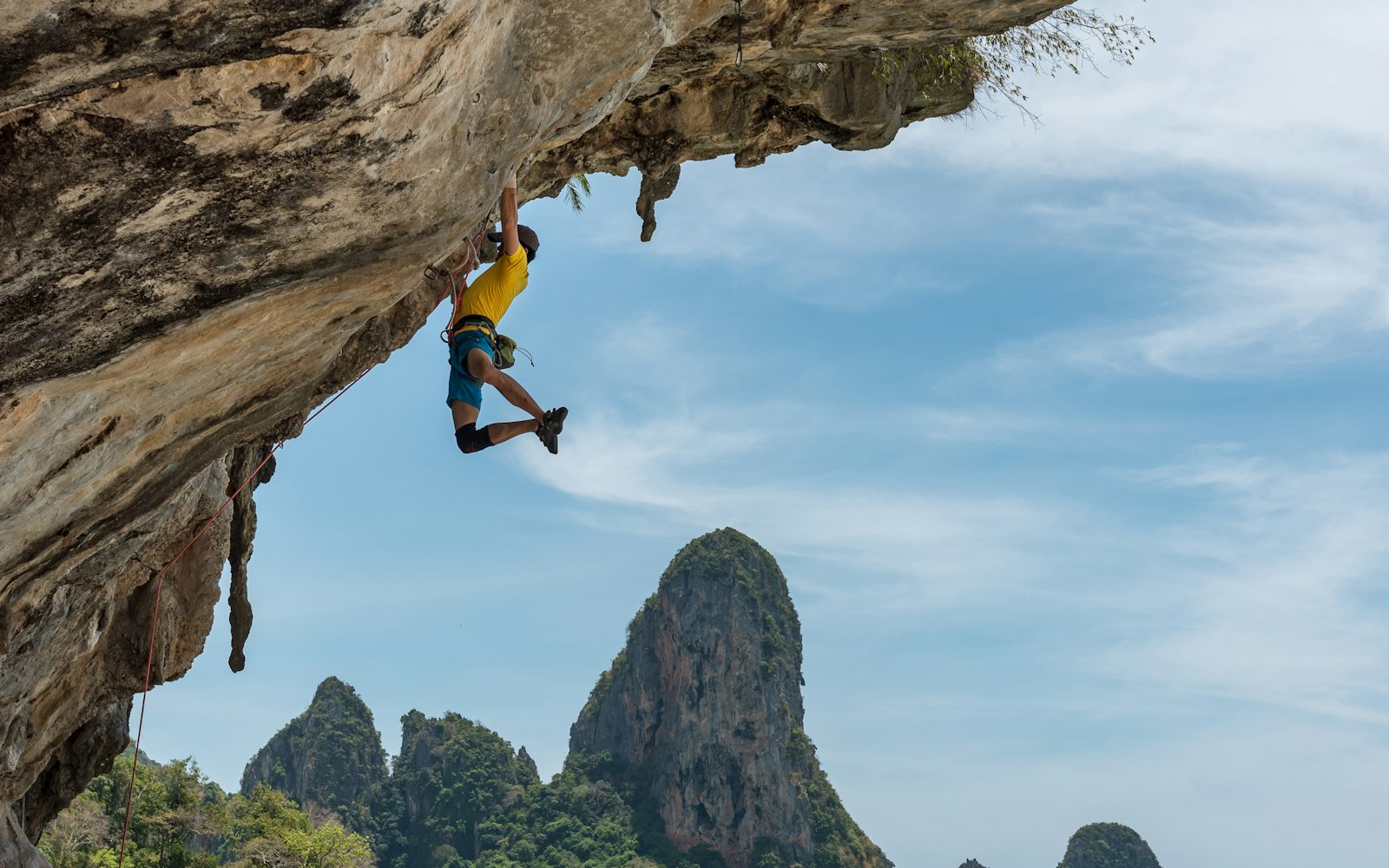
Climbing alone or with a partner — the fall you can't call in.
Climbing mode runs the highest fall sensitivity Vygard offers, because a fall from height is exactly the moment you can't reach your phone. Keep a belay buddy in the loop and a log of your gear's life.
- HighFall sensitivity
- LiveBelay-buddy status
- LogGear retirement
A fall from height is high-energy and sudden, and it's the moment you're least able to reach for a phone. Climbing mode turns fall sensitivity to its highest setting and keeps a partner in the loop, so someone always knows the session is live.
High-sensitivity fall detection, belay buddy and gear log.
- High-sensitivity fall-from-height detection
- Belay-buddy live status share
- Gear retirement + rope-use log
- One-tap SOS to your people with precise location
How Climbing works, step by step.
- 1
Start Climbing on the home screen
Tap Climbing in Vygard Sports. Fall sensitivity goes to its highest setting — watching for the violent motion of a fall from height.
- 2
Add a belay buddy (optional)
Share live status with the person on the ground or a partner at home, so someone always knows the session is running.
- 3
Climb — the engine watches
A detected fall starts a countdown. If you can't cancel it, Vygard alerts your contact with your exact location.
- 4
Log your gear
Record rope use and gear age between sessions so retirement dates don't creep up on you.
The Climbing pack, spec by spec.
The same safety engine as every mode in Vygard Sports, tuned for climbing. Indicative values — refined in real-world use.
- Detects
- High-energy fall from height
- Fall sensitivity
- Highhighest setting Vygard offers
- Silent check-in
- Every 30 min
- Location cadence
- Every 30 seconds
- What triggers an alert
- Detected fall (countdown not cancelled) or manual SOS
- Who's notified & how
- Your belay buddy / trusted contact by push, SMS & call — plus a UK ARC on the monitored tier
- Works off-grid
- Alerts triggered with no signal are saved with your last location and sent the instant coverage returns — over satellite on supported phones.
- Devices
- iPhone · Apple Watch (wrist-only SOS) · Android + Wear OS. No dedicated hardware to buy.
- Price
- $8.99/mo — one subscription covers every mode. Start free, no card.
Highest sensitivity
Tuned for the sharp, high-energy motion of a fall from height.
Belay buddy
A live status share so a partner always knows the session is running.
Gear log
Track rope use and gear age; get a nudge before kit is due for retirement.
Create your account, then download Vygard Sports.
Start your free account online in a couple of minutes — no card needed. Then install Vygard Sports and sign in; Climbing is one of the modes waiting for you. Scan to download, or tap your store.